






 Web-based Loyalty Platform
 Loyalty App

 e-Voucher










 Blog
Blog 


Introduction
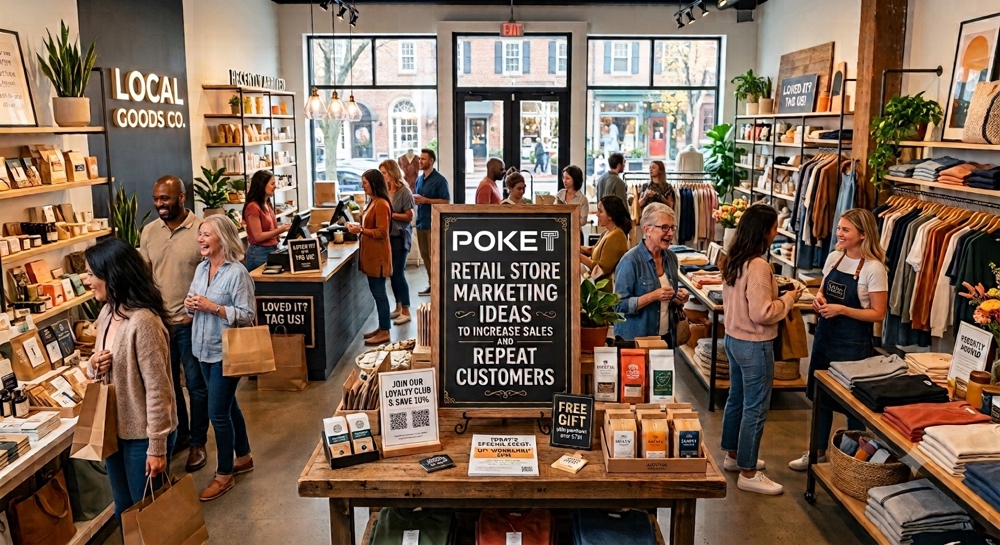
Running a successful retail store is more challenging than ever. Consumers have more choices, higher expectations, and countless shopping channels competing for their attention. Whether you operate a boutique, supermarket, gift shop, electronics store, beauty retailer, or chain of outlets, attracting new customers is only half the battle. The real opportunity lies in encouraging them to return again and again.
The most successful retailers don’t rely on discounts alone. Instead, they combine effective retail marketing strategies, personalised customer experiences, and customer loyalty programs to build lasting relationships that drive sustainable growth.
If you’re wondering how to increase retail sales without constantly increasing your advertising budget, this guide is for you. We’ve compiled 35 proven retail store marketing ideas that help retailers attract more shoppers, improve retail customer engagement, strengthen retail customer retention, and increase repeat purchases.
Whether you’re a small independent retailer or a multi-store enterprise, these ideas can help you grow your business while creating memorable shopping experiences.
Quick Answer: The best retail store marketing ideas include launching a retail loyalty program, personalising promotions, hosting in-store events, improving customer service, leveraging social media, encouraging referrals, using email marketing, and delivering a seamless omnichannel shopping experience.
Why Retail Marketing Matters More Than Ever
Retail has evolved significantly over the past decade. Customers now expect convenience, personalisation, and consistency across both physical and digital channels. They often discover products on social media, compare prices online, visit a physical store to experience the product, and finally complete the purchase through their preferred channel.
This changing behaviour means retailers must adopt modern retail marketing ideas that go beyond traditional advertising.
Effective retail marketing strategies help businesses:
- Increase foot traffic
- Boost average transaction value
- Improve customer retention
- Increase repeat customers
- Build stronger brand awareness
- Encourage word-of-mouth referrals
- Create loyal brand advocates
- Maximise customer lifetime value
Instead of focusing solely on acquiring new customers, successful retailers invest in keeping existing customers engaged. Research consistently shows that retaining customers is significantly more cost-effective than acquiring new ones, making retail customer retention one of the highest-return investments for any retail business.
1. Launch a Retail Loyalty Program
One of the most effective retail marketing ideas is implementing a retail loyalty program that rewards customers for shopping with your business.
Instead of offering one-time discounts, a loyalty program encourages customers to return repeatedly by rewarding purchases, referrals, birthdays, reviews, and other valuable actions.
Popular loyalty rewards include:
- Points for every purchase
- Cashback rewards
- Birthday gifts
- Exclusive member pricing
- VIP membership tiers
- Early access to new products
- Free gifts after spending milestones
A well-designed loyalty rewards program increases customer engagement while encouraging shoppers to spend more over time.
Why it works
Customers appreciate being recognised and rewarded. Even small incentives can influence purchasing decisions and strengthen emotional connections with your brand.
Implementation Tip
Choose a digital loyalty platform that allows customers to collect rewards using their mobile phone instead of physical loyalty cards. Digital solutions also provide valuable customer insights for future marketing campaigns.
2. Personalise Promotions Using Customer Data
Generic promotions often produce average results. Personalised offers, however, are much more likely to capture attention because they are relevant to each customer.
Using purchase history, shopping preferences, and customer behaviour, retailers can send targeted offers such as:
- Discounts on favourite products
- Birthday rewards
- Seasonal recommendations
- Exclusive member promotions
- Product replenishment reminders
Personalisation improves retail customer engagement while increasing the likelihood of repeat purchases.
Example
A cosmetics retailer can automatically send skincare promotions to customers who frequently purchase facial products, rather than sending the same promotion to everyone.
Why it works
Relevant offers feel helpful rather than intrusive, increasing redemption rates and customer satisfaction.
3. Create an Omnichannel Shopping Experience
Today’s shoppers expect a seamless experience whether they shop online or visit your physical store.
An omnichannel retail strategy connects every customer touchpoint, allowing shoppers to interact with your brand consistently across channels.
Examples include:
- Earn loyalty points online and in-store
- Redeem rewards across all locations
- View purchase history from every channel
- Buy online and collect in-store
- Receive personalised promotions regardless of where they shop
Providing a unified shopping experience removes friction and encourages customers to stay loyal.
Why it works
Customers value convenience. The easier it is to shop with your business, the more likely they are to return.
4. Reward Referrals
Happy customers are your best marketers.
Referral programmes encourage existing customers to introduce friends and family in exchange for rewards.
Popular referral incentives include:
- Bonus loyalty points
- Discount vouchers
- Store credits
- Free products
- Cashback rewards
Referral marketing generates highly qualified customers because recommendations come from trusted people rather than advertisements.
Example
Offer both the referrer and the new customer a reward after the first successful purchase.
This creates a win-win situation that encourages participation.
5. Improve Your In-Store Customer Experience
One of the simplest yet most overlooked retail marketing strategies is creating an enjoyable shopping environment.
Consider improving:
- Store layout
- Product displays
- Lighting
- Music
- Staff friendliness
- Checkout speed
- Product demonstrations
Positive experiences create memorable visits that encourage customers to return.
Why it works
Customers remember how a store makes them feel, not just what they buy.
Excellent retail customer experience is often the deciding factor between choosing your store or a competitor.
6. Run Limited-Time Retail Promotions
Urgency is a powerful marketing tool.
Limited-time retail promotions encourage customers to act quickly rather than postponing purchases.
Examples include:
- Weekend flash sales
- Buy One Get One Free
- Member-exclusive promotions
- Double loyalty points weekends
- Seasonal clearance events
Avoid running discounts continuously, as customers may delay purchases while waiting for the next promotion.
Instead, use carefully planned campaigns throughout the year.
Why it works
Scarcity encourages immediate action while keeping promotions exciting.
7. Collect and Showcase Customer Reviews
Modern shoppers trust reviews almost as much as personal recommendations.
Encourage satisfied customers to leave reviews on:
- Your website
- Product pages
Display positive reviews prominently in-store and online.
You can also reward customers with loyalty points for submitting honest product reviews.
Why it works
Reviews build trust, reduce purchase hesitation, and improve search engine visibility.
8. Build an Email Marketing List
Email remains one of the highest-performing channels for digital marketing for retail stores because you own the audience and aren’t dependent on social media algorithms.
Send valuable emails such as:
- New product launches
- Exclusive member promotions
- Birthday rewards
- Shopping tips
- Event invitations
- Loyalty programme updates
Segment your email list based on customer interests for better engagement.
Why it works
Regular communication keeps your brand top of mind and encourages repeat visits.
9. Use SMS and WhatsApp Marketing
While email is effective, SMS and WhatsApp often achieve significantly higher open rates because messages are delivered directly to customers’ mobile devices.
Retailers can use these channels for:
- Flash sale announcements
- Loyalty reward reminders
- Appointment confirmations
- Order updates
- Birthday greetings
- New product arrivals
Always ensure customers have opted in to receive marketing communications and comply with relevant privacy regulations.
Why it works
Timely, concise messages delivered through familiar channels can generate immediate customer action.
10. Offer Exclusive VIP Membership Tiers
Not all customers have the same value to your business.
A tiered customer loyalty program recognises and rewards your most loyal shoppers with increasingly valuable benefits.
Typical VIP benefits include:
- Priority customer service
- Early access to sales
- Exclusive events
- Higher points earning rates
- Complimentary gifts
- Free delivery
VIP programmes motivate customers to spend more in order to unlock higher membership levels.
Why it works
Customers enjoy feeling recognised and are often motivated by achieving the next reward tier.
11. Host In-Store Events
Events create memorable experiences while encouraging customers to spend more time in your store.
Examples include:
- Product launch events
- Workshops
- Live demonstrations
- Meet-the-expert sessions
- Holiday celebrations
- Customer appreciation days
Partnering with complementary local businesses or influencers can further increase attendance and exposure.
Why it works
Events strengthen community relationships and give customers another reason to visit beyond making a purchase.
12. Encourage User-Generated Content on Social Media
Your customers can become powerful advocates for your brand.
Encourage shoppers to post photos or videos featuring your products and tag your business on social media.
Ideas include:
- Monthly photo contests
- Branded hashtags
- “Customer of the Month” features
- Giveaway campaigns
- Product styling competitions
Reward participation with loyalty points, vouchers, or small gifts to encourage ongoing engagement.
Why it works
User-generated content builds authenticity, increases brand reach, and provides valuable social proof that influences potential customers.
13. Optimise Your Google Business Profile
If you operate a physical retail store, your Google Business Profile is one of your most valuable marketing assets. Many shoppers search online before deciding which store to visit.
A well-optimised profile helps your business appear in local search results and Google Maps, making it easier for nearby customers to find you.
Ensure your profile includes:
- Accurate business information
- Opening hours
- High-quality store photos
- Product images
- Customer reviews
- Frequently Asked Questions
- Contact details
- Website link
Regularly updating your profile with new photos and posts signals that your business is active and engaged.
Why it works
A complete and optimised profile increases visibility in local searches, improves credibility, and drives more foot traffic.
Implementation Tip
Encourage satisfied customers to leave Google reviews after each purchase. Positive reviews improve local search rankings and influence purchasing decisions.
14. Create Valuable Content That Solves Customer Problems
Content marketing isn’t just for online businesses. Retailers can use educational content to attract new customers, build trust, and establish authority within their industry.
Depending on your niche, consider publishing:
- Buying guides
- Product comparison articles
- How-to tutorials
- Gift ideas
- Seasonal shopping guides
- Product care tips
- Frequently Asked Questions
For example, a furniture retailer could publish guides on choosing the right sofa, while a beauty retailer could create skincare routines for different skin types.
Why it works
Helpful content attracts organic search traffic and positions your business as a trusted expert rather than just another retailer.
15. Invest in Social Media Marketing
Social media remains one of the most effective digital marketing for retail stores because it allows businesses to showcase products, interact with customers, and build brand awareness.
Focus on the platforms where your audience spends the most time, such as:
- TikTok
- LinkedIn (for B2B retailers)
- YouTube
Share a mix of content including:
- New arrivals
- Behind-the-scenes videos
- Customer testimonials
- Product demonstrations
- Staff introductions
- Educational tips
- Limited-time promotions
Why it works
Consistent social media activity keeps your brand visible and encourages customer interaction beyond the store.
16. Launch Seasonal Marketing Campaigns
Retail demand naturally changes throughout the year. Planning campaigns around holidays and seasonal events helps maintain customer interest and increase sales.
Popular retail campaigns include:
- Chinese New Year
- Hari Raya
- Mother’s Day
- Father’s Day
- Back-to-school promotions
- Halloween
- Black Friday
- Christmas
- New Year
Rather than simply offering discounts, create themed shopping experiences that make your campaigns memorable.
Why it works
Seasonal campaigns align with customer purchasing behaviour and create natural reasons for shoppers to visit your store.
17. Use Customer Segmentation for Better Marketing
Not every customer has the same interests or purchasing habits.
By segmenting customers based on their behaviour, retailers can deliver more relevant marketing campaigns.
Common customer segments include:
- New customers
- VIP customers
- Frequent buyers
- Inactive customers
- High spenders
- Birthday customers
- Customers who haven’t purchased recently
Each group should receive different messages and offers based on their needs.
Why it works
Personalised communication improves engagement, increases conversion rates, and strengthens retail customer retention.
18. Offer Click-and-Collect Services
Many shoppers enjoy browsing online but prefer collecting their purchases in-store.
Click-and-collect combines the convenience of e-commerce with the speed of local retail.
Additional benefits include:
- Reduced shipping costs
- Faster order fulfilment
- More in-store visits
- Opportunities for additional purchases during collection
Why it works
Customers appreciate flexibility, while retailers benefit from increased foot traffic and impulse purchases.
19. Introduce Gamification Into Your Loyalty Programme
Gamification transforms shopping into an engaging experience by rewarding customers for completing activities.
Examples include:
- Spin-the-wheel rewards
- Scratch-and-win promotions
- Monthly challenges
- Achievement badges
- Bonus point missions
- Digital stamp cards
Gamification keeps customers actively engaged with your retail loyalty program, even between purchases.
Why it works
People naturally enjoy collecting rewards and achieving goals, making shopping more enjoyable and increasing repeat visits.
20. Partner with Local Businesses
Collaborating with nearby businesses allows both parties to reach new audiences without significantly increasing marketing costs.
Examples include:
- Joint promotions
- Shared events
- Cross-discount programmes
- Gift bundles
- Referral partnerships
For example, a clothing boutique could partner with a nearby café to offer customers exclusive discounts at both businesses.
Why it works
Strategic partnerships expand your reach while strengthening your presence within the local community.
21. Use Influencer Marketing
Local influencers often have highly engaged audiences that trust their recommendations.
Rather than focusing only on celebrity influencers, consider working with micro-influencers whose followers closely match your target customers.
Campaign ideas include:
- Store visits
- Product reviews
- Shopping challenges
- Live demonstrations
- Giveaways
- Product launches
Why it works
Authentic recommendations from trusted creators generate awareness and drive qualified traffic to your retail store.
22. Implement a Retail CRM
A Retail CRM helps businesses understand customer behaviour, manage relationships, and personalise marketing activities.
Instead of relying on spreadsheets, a CRM centralises important customer information, including:
- Purchase history
- Loyalty points
- Rewards
- Customer preferences
- Birthday information
- Marketing consent
- Customer lifetime value
This data allows retailers to automate personalised campaigns and make smarter business decisions.
Why it works
Better customer insights lead to better marketing, stronger relationships, and higher customer retention.
Implementation Tip
Choose a loyalty platform that includes CRM capabilities, allowing customer data and rewards to work together seamlessly instead of using multiple disconnected systems.
23. Encourage Upselling and Cross-Selling
One of the fastest ways to increase retail sales is by increasing the value of each transaction.
Train staff to recommend complementary products naturally.
Examples include:
- Phone case with a smartphone
- Matching accessories with clothing
- Skincare products that complement cosmetics
- Coffee beans with a coffee machine
Avoid aggressive sales tactics. Recommendations should genuinely help customers.
Why it works
Customers appreciate helpful suggestions, and retailers benefit from higher average order values.
24. Measure Marketing Performance and Optimise Continuously
Successful retailers don’t rely on guesswork.
Track the performance of your retail marketing strategies using measurable data.
Monitor key metrics such as:
- Sales revenue
- Customer acquisition cost
- Repeat purchase rate
- Customer retention rate
- Average transaction value
- Redemption rate
- Loyalty programme participation
- Email open rate
- SMS click-through rate
- Return on advertising spend
Review these metrics regularly to identify what’s working and where improvements can be made.
Why it works
Data-driven decisions help retailers allocate marketing budgets more effectively and achieve better long-term results.
Quick Wins You Can Implement This Month
If you’re looking for fast ways to improve your marketing, start with these initiatives:
| Marketing Idea | Expected Benefit |
|---|---|
| Optimise your Google Business Profile | Increase local visibility and foot traffic |
| Launch a customer referral campaign | Acquire new customers at a lower cost |
| Send personalised email promotions | Improve customer engagement and repeat purchases |
| Introduce a VIP loyalty tier | Increase customer lifetime value |
| Add click-and-collect | Improve convenience and encourage additional in-store spending |
| Encourage Google reviews | Build trust and improve local SEO |
| Use a Retail CRM | Deliver personalised marketing and improve customer retention |
These strategies require relatively little investment but can deliver measurable improvements when executed consistently.
25. Launch a Mobile Loyalty App
Consumers increasingly expect businesses to offer digital experiences. A mobile loyalty app makes it easier for customers to engage with your brand anytime, anywhere.
With a mobile loyalty app, customers can:
- Check loyalty points
- Redeem rewards
- Receive personalised promotions
- Store digital vouchers
- View purchase history
- Access exclusive member benefits
Why it works
A mobile app keeps your brand on your customers’ phones, increasing engagement and encouraging repeat visits.
26. Create a Memorable Unboxing Experience
The customer experience doesn’t end at checkout.
For retailers selling online or offering gift wrapping, attractive packaging can leave a lasting impression.
Consider:
- Branded packaging
- Personalised thank-you cards
- Discount vouchers for the next purchase
- QR codes linking to your loyalty programme
- Small surprise gifts
Why it works
A memorable unboxing experience encourages customers to share their purchases on social media, increasing brand exposure.
27. Encourage Customer Feedback
One of the best customer retention strategies is listening to your customers.
Collect feedback through:
- QR code surveys
- Email questionnaires
- SMS surveys
- In-app feedback forms
- Google reviews
Ask questions about:
- Product quality
- Customer service
- Store cleanliness
- Product selection
- Shopping experience
Why it works
Customers appreciate businesses that listen and continuously improve.
28. Reward Customers on Special Occasions
Personalised rewards make customers feel valued.
Offer rewards for:
- Birthdays
- Membership anniversaries
- Wedding anniversaries
- First purchase anniversary
- Seasonal celebrations
Rewards can include:
- Bonus loyalty points
- Discount vouchers
- Complimentary products
- Free delivery
Why it works
Personalised experiences strengthen emotional connections and improve retail customer retention.
29. Introduce Subscription or Membership Programmes
Not every retailer needs a subscription model, but for suitable businesses it can generate predictable recurring revenue.
Examples include:
- Monthly beauty boxes
- Coffee subscriptions
- Pet food deliveries
- VIP shopping clubs
- Paid membership programmes
Benefits may include:
- Exclusive discounts
- Early access to new products
- Free shipping
- Bonus loyalty points
- Premium customer support
Why it works
Subscriptions encourage long-term customer relationships while increasing customer lifetime value.
30. Offer Flexible Payment Options
Convenience influences purchasing decisions.
Support multiple payment methods such as:
- Credit cards
- Digital wallets
- QR payments
- Buy Now, Pay Later (BNPL)
- Contactless payments
Why it works
Reducing payment friction leads to higher conversion rates and improved customer satisfaction.
31. Use AI to Personalise Marketing
Artificial intelligence is becoming increasingly accessible for retailers of all sizes.
AI can help:
- Recommend products
- Predict customer preferences
- Automate email campaigns
- Personalise promotions
- Analyse customer behaviour
- Improve customer segmentation
Why it works
AI enables retailers to deliver highly relevant experiences at scale, improving both customer engagement and sales.
32. Train Your Staff to Deliver Exceptional Service
Even with the best technology, people remain one of the biggest differentiators in retail.
Invest in staff training covering:
- Product knowledge
- Customer service
- Upselling techniques
- Complaint handling
- Loyalty programme promotion
Why it works
Friendly, knowledgeable staff create positive shopping experiences that encourage customers to return.
33. Monitor Competitors and Industry Trends
Retail is constantly evolving.
Regularly monitor:
- Competitor promotions
- Pricing strategies
- Product launches
- Consumer behaviour
- Technology trends
- Marketing campaigns
Use these insights to identify opportunities rather than simply copying competitors.
Why it works
Staying informed helps retailers adapt quickly to changing market conditions.
34. Build a Strong Customer Community
Customers are more loyal when they feel part of a community.
Ideas include:
- Facebook groups
- VIP member events
- Customer appreciation days
- Live product demonstrations
- Educational workshops
- Charity partnerships
Why it works
Communities create emotional connections that go beyond price competition.
35. Invest in a Modern Retail Loyalty Platform
One of the most impactful retail marketing ideas is implementing a modern retail loyalty platform that brings together rewards, customer data, automation, and analytics in a single solution.
Instead of managing separate systems for promotions, customer records, vouchers, and communications, retailers can centralise everything in one platform.
A comprehensive loyalty platform can help you:
- Launch a digital customer loyalty program
- Manage a loyalty rewards program
- Automate personalised promotions
- Reward referrals
- Create VIP membership tiers
- Issue digital vouchers
- Track customer behaviour
- Measure campaign performance
- Support both physical stores and e-commerce
- Deliver a seamless omnichannel experience
Why it works
Businesses using an integrated loyalty platform can improve operational efficiency, strengthen customer relationships, and make better marketing decisions based on real customer data.
Common Retail Marketing Mistakes to Avoid
Even the best marketing campaigns can underperform if common mistakes aren’t addressed.
1. Focusing only on new customers
Many retailers spend heavily on acquiring new customers while overlooking existing ones. Investing in retail customer retention often delivers a higher return because loyal customers tend to purchase more frequently and spend more over time.
2. Running too many discounts
Constant promotions can reduce perceived value and train customers to wait for sales. Instead, balance discounts with value-added rewards such as loyalty points, exclusive member benefits, and personalised offers.
3. Ignoring customer data
Without analysing purchase behaviour and customer preferences, it’s difficult to deliver relevant marketing. Use data to personalise promotions and improve campaign performance.
4. Treating online and offline channels separately
Customers expect a seamless experience across websites, mobile apps, and physical stores. An omnichannel retailstrategy improves convenience and strengthens customer loyalty.
5. Not measuring marketing performance
Track key performance indicators (KPIs) such as repeat purchase rate, customer lifetime value, loyalty programme participation, and campaign ROI. Measuring results helps you identify what works and optimise future campaigns.
Frequently Asked Questions
What are the best retail store marketing ideas?
Some of the most effective retail store marketing ideas include launching a retail loyalty program, personalising promotions, improving the in-store experience, optimising your Google Business Profile, using email and WhatsApp marketing, creating seasonal campaigns, and rewarding customer referrals.
How can I increase retail sales?
To increase retail sales, focus on improving customer retention as well as acquiring new customers. Personalised promotions, upselling, loyalty rewards, omnichannel shopping, and excellent customer service can all increase revenue and average order value.
Why is customer retention important in retail?
Existing customers are generally more likely to make repeat purchases and recommend your business to others. Strong retail customer retention strategies also reduce customer acquisition costs and increase customer lifetime value.
What is a retail loyalty program?
A retail loyalty program rewards customers for shopping with your business. Customers can earn points, cashback, vouchers, or exclusive benefits, encouraging them to return and build a stronger relationship with your brand.
What features should a retail loyalty platform have?
A modern retail loyalty platform should include:
- Points and rewards
- Digital vouchers
- Membership tiers
- Referral programme
- CRM integration
- Customer analytics
- Marketing automation
- Mobile wallet support
- Omnichannel integration
- Reporting dashboard
Conclusion
There is no single marketing tactic that guarantees success. The most successful retailers combine multiple retail marketing strategies to create outstanding customer experiences, increase retail customer engagement, and build long-term loyalty.
Whether you’re looking to increase retail sales, attract more foot traffic, or encourage repeat customers, the key is consistency. Start by implementing a few of the ideas in this guide, measure your results, and continue refining your approach based on customer behaviour and performance data.
Technology also plays an increasingly important role. A modern retail loyalty platform allows retailers to automate marketing, personalise customer interactions, and make smarter decisions using real-time insights.
At Poket, we help retailers of all sizes grow through our all-in-one retail loyalty software. The loyalty platform supports physical stores and e-commerce, enabling businesses to launch digital customer loyalty programs, reward repeat purchases, manage referrals, create VIP membership tiers, issue digital vouchers, automate personalised campaigns, and gain valuable customer insights—all from a single platform.
If you’re ready to build stronger customer relationships and grow your business, discover how Poket Loyalty Platform can help you deliver a seamless omnichannel loyalty experience and turn first-time shoppers into lifelong customers.
Final Thoughts
Retail marketing continues to evolve, but one principle remains unchanged: customers return to businesses that consistently deliver value and memorable experiences. By combining creative marketing with data-driven decision-making and a robust loyalty platform, retailers can build sustainable growth, improve customer retention, and stay competitive in an increasingly digital marketplace.
The 35 ideas in this guide provide a practical roadmap that retailers can implement over time. Start with the strategies that best fit your business, measure the impact, and continue optimising. Small, consistent improvements can lead to stronger customer loyalty, higher sales, and long-term success.